
OceanNexus kicks off four years of curiosity and collaboration
What happens when researchers in ocean physics, marine ecology and social science are asked not only to contribute their own expertise, but to become genuinely curious about everyone else’s?
If you’re going to drive a manual car, you have to learn to use the accelerator, the clutch and the gear stick – while steering the car at the same time.
The climate crisis is, in some ways, a bit like that.
You don’t get very far if you can’t make the different parts work together.
OceanNexus is a manual car. And on 1 September, researchers from across Europe met in Copenhagen for their first driving lesson. Okay, the analogy only takes us so far. But the challenge is real.
Learning enough to ask better questions
OceanNexus brings together researchers from very different disciplines to investigate what happens when major changes in the ocean propagate through marine ecosystems and into society.
That means ocean and climate physicists need to talk to ecologists. Ecologists need to connect their work with researchers looking at fisheries, governance and society. And everyone needs to become curious about questions that may sit well outside their own field.
That can be challenging. Different disciplines work with different models, methods and terminology, and sometimes even different understandings of concepts such as uncertainty and tipping points. Some of these differences became apparent during the kick-off, and they are exactly the kind of conversations that will need to continue throughout the project.
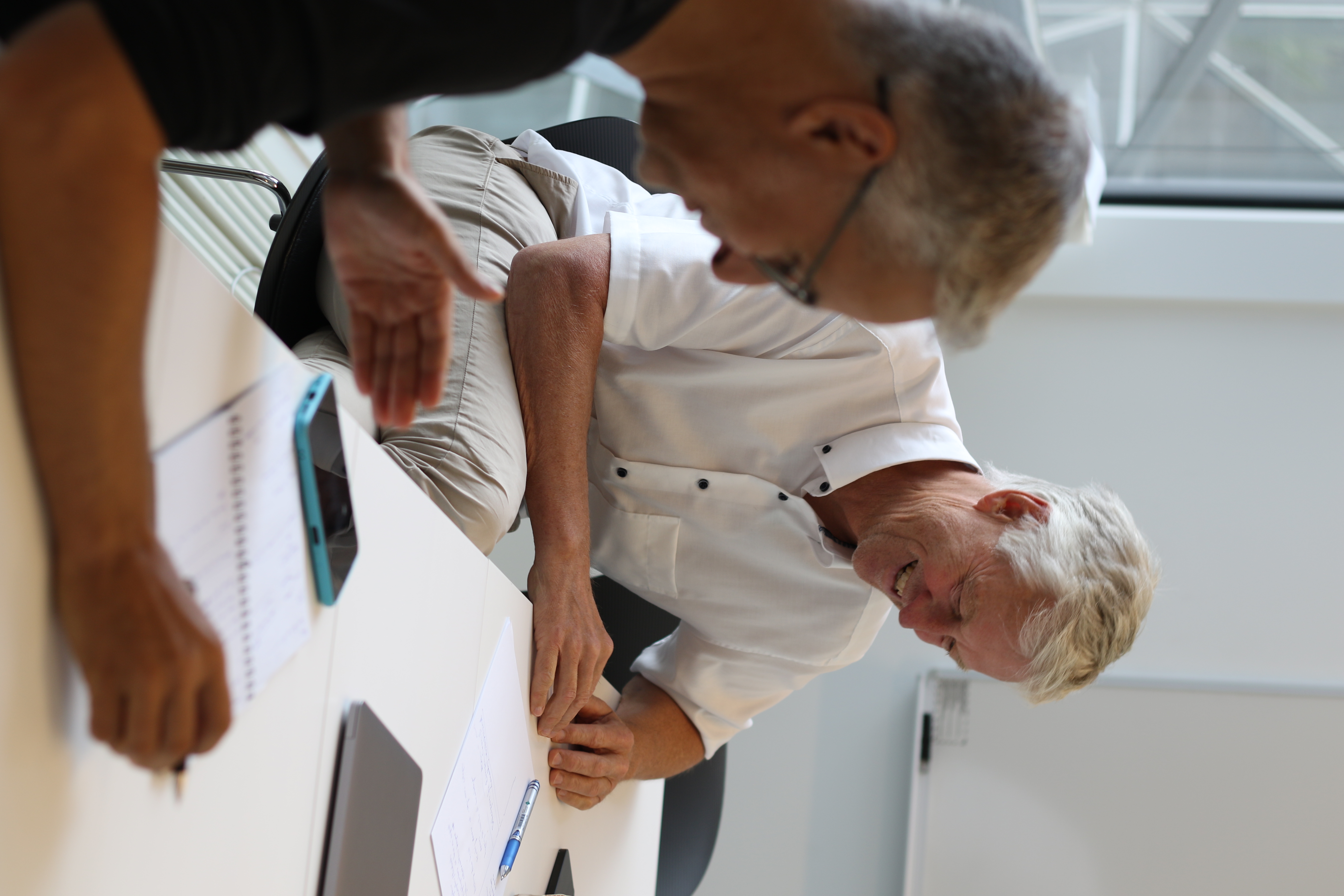
The point was not to solve all these questions during three days in Copenhagen. In many cases, identifying the questions, and discovering who else in the room might help answer them, was the point.
Looking four years ahead
The participants were also invited to look beyond the immediate research tasks and imagine OceanNexus four years from now: What would they like the project to have achieved – and what would it take to get there?
Working in groups, they explored their ambitions for the project and for the way they want to work together across disciplines.
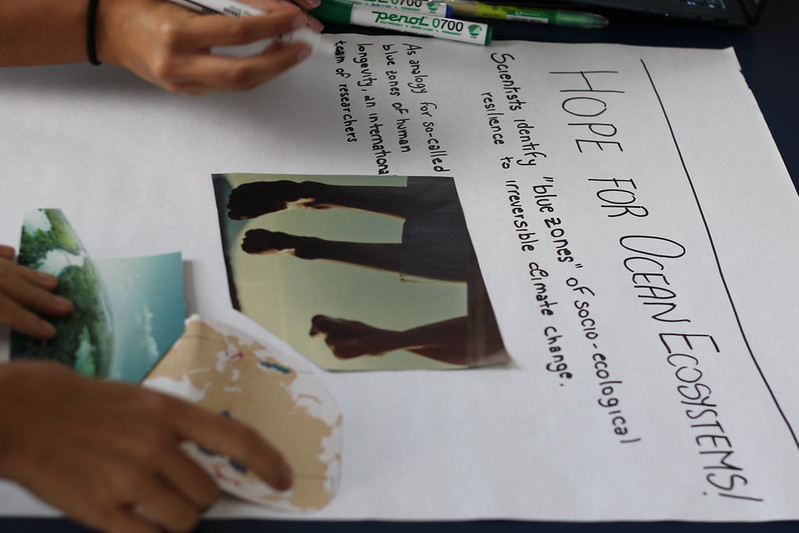
One message emerged particularly clearly: scientific expertise alone will not be enough. Curiosity about other disciplines, trust, shared ownership and a willingness to move beyond one’s own research agenda will matter too.
And perhaps that is where the driving lesson analogy works after all.
Over the next four years, OceanNexus will investigate a chain of connections. From changes in the physical ocean, through marine ecosystems, to the people and societies that depend on them.
Each discipline brings its own expertise. But to move forward, we have to learn how to make all those parts work together.